
AI Analysis Highlights UW Antisemitism & Political Violence
Experimenting with Notebook LM to analyze University of Washington police reports.

While I attended the University of Washington, I witnessed a tremendous amount of on-campus turmoil as a result of deepening political division. Particularly, following the terrorist attack on Israel by Hamas on October 7th, 2023, the cultural lack of free speech materialized as targeted, antisemitic acts of violence on multiple occasions. Some of the large-scale incidents were picked up by local and national news media, which included the occupation and vandalism at the Interdisciplinary Engineering Building.
However, typically hidden from the superficial public view are acts of violence and intimidation deeply affecting the daily lives of students who dare to (unlike the perpetrators) peacefully dissent from others. Over the period of approximately two years, I collected the official police reports created by the University of Washington Police Department (UWPD), documenting the reported politically motivated incidents on campus in 2024. Many of the incidents took place in April and May of 2024, the period during which dozens of anti-Israel activists occupied a portion of the campus with camping tents for nearly a month.
I supplied these police reports along with some relevant, publicly available news articles to the AI model service Notebook LM to analyze the findings, and ideally acquire overarching themes present in the reports. The analysis highlights a concerning campus climate in which the cultural lack of free speech materializes as criminal acts of violence and intimidation.
Data Table — Summary of reported incidents
First, Notebook LM was able to effectively list the incidents described in the sources along with brief summaries:
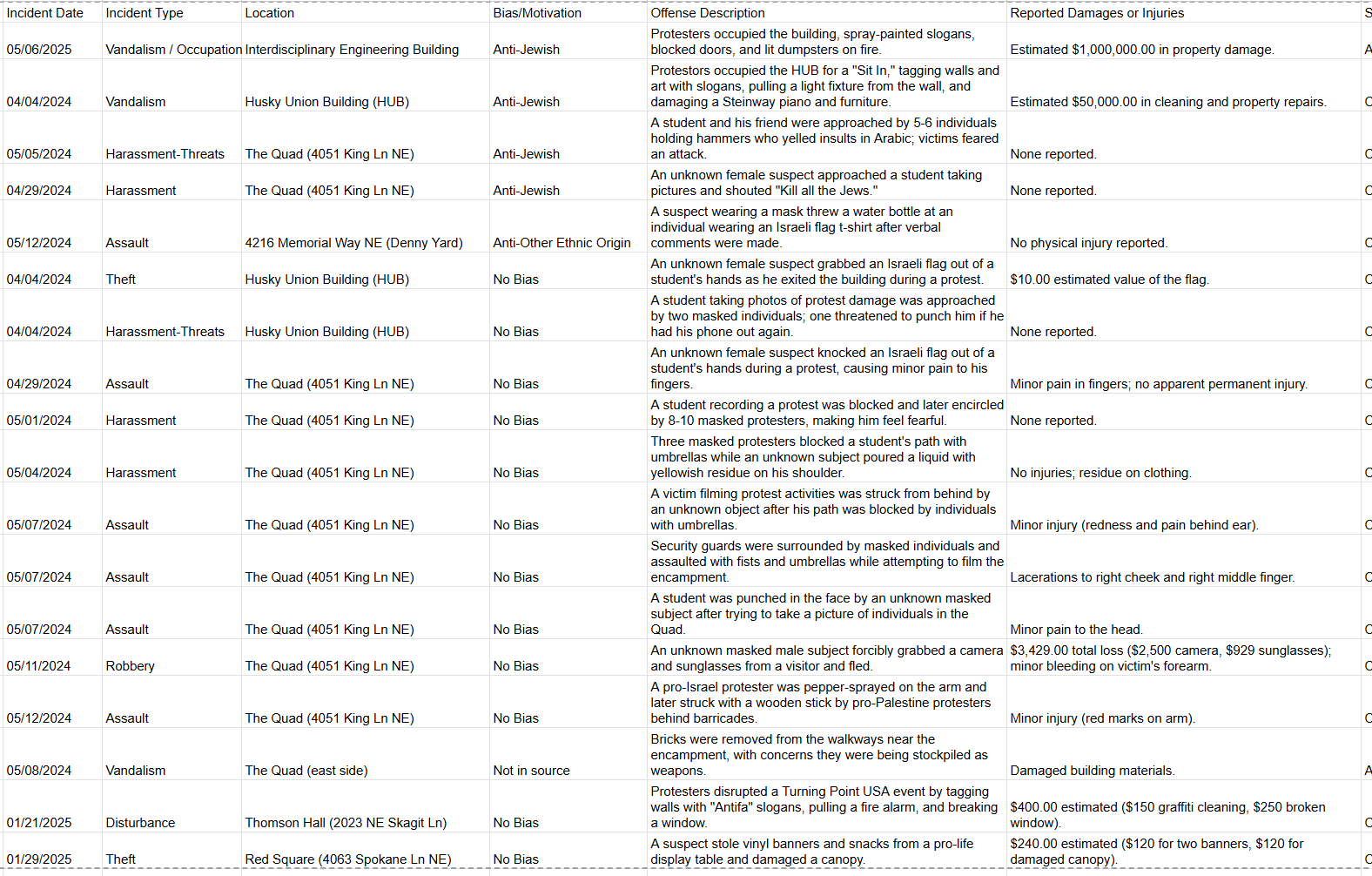
Among the 17 incident reports analyzed here, 5 of them identified ethnic bias in the motivation. 4 of them are explicitly labeled as anti-Jewish. It is worth noting that the other incident among the five, which received the label “anti-other ethnic origin” by the investigators, was an attack on a counter-protestor wearing an Israeli flag.
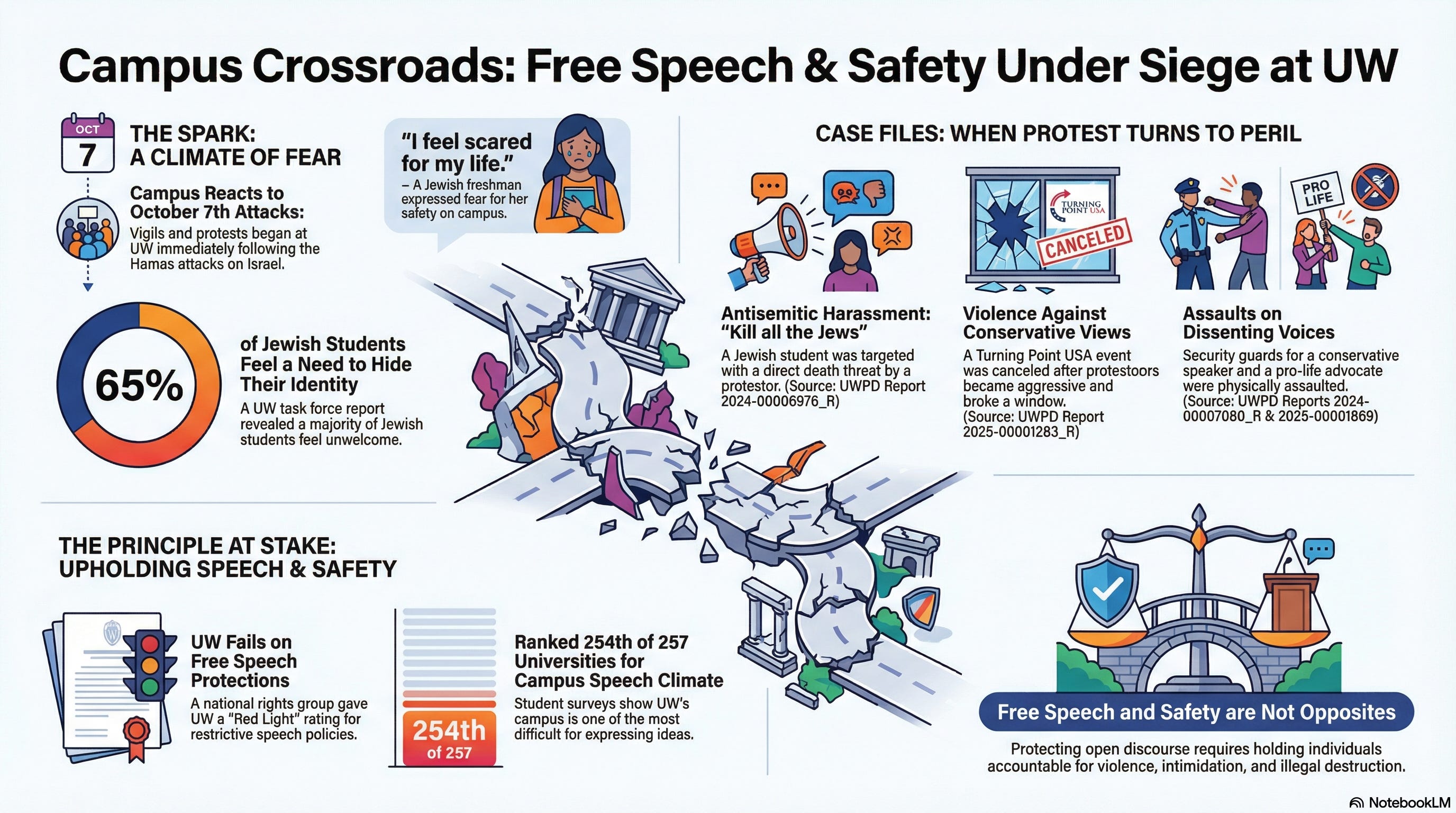
Infographics — Visually summarizing the concerning campus climate
One strength of AI is to provide visually appealing artwork based on the user input. In this example, Notebook LM was able to generate the infographics below, effectively combining robust data analysis with the generative capability.
What can the university do?
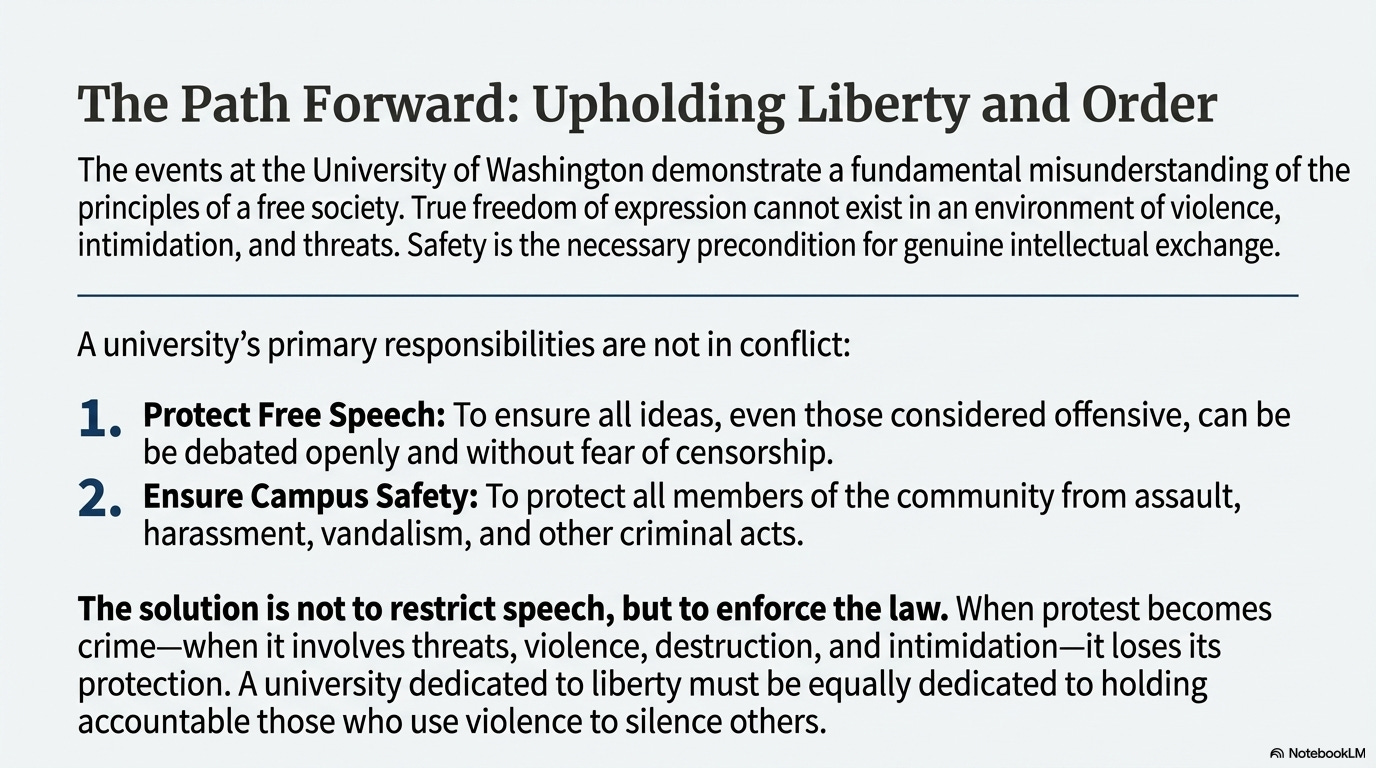
Political violence on campus is not a spillover of free speech. On the contrary, it is an act that uses the cultural lack of free speech to further suppress the speech of dissenters. Although the definition of safety should not be arbitrarily expanded in an attempt to censor speech, protecting an environment free from material acts of violence that seek to suppress others’ speech is a prerequisite for having a culture of free speech. When Notebook LM created a set of presentation slides, this point was very well summarized.
AI tools empowering the citizenry
It is hard to predict the overall, long-term impact of AI tools on people’s livelihood. However, there are ways in which such tools can be used to empower the ordinary citizens in better monitoring public affairs. While public disclosure requests serve as an important mechanism, the disclosed records are oftentimes large and contain irrelevant information. In this example using the incidents report from the campus of the University of Washington, it was demonstrated on a preliminary scale that we can utilize AI tools to analyze the data and visualize them in appealing ways, allowing more effective public dissemination of the findings.